For the longest time, I’ve been fascinated by those small Peltier based fridges and coolers for sale on the internet. They generally drop the temp to something pretty “cool” but they often fall short of an actual “refrigerator”, let alone freezer.
(Video of my test freezer – article continues below)
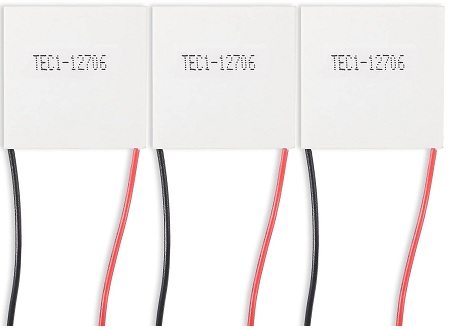
What I’d really like to see is a compact, solid state freezer that uses peltier modules and can take a direct solar panel feed to power it. This is a bit of a challenge, as peltiers are not as effective as compressor and refrigerant based systems. However, they are small, have no moving parts and relatively inexpensive. Plus they don’t need high pressure copper pipes, refrigerant or a compressor. While they have serious downsides, they clearly have major advantages.
The past few months I challenged myself to build a solid state freezer with at least 1L (less than a third of a gallon) of capacity. It must be solar powered and use Peltier modules to cool it. I had been ordering some of the parts needed gradually as I could afford them. The peltier modules I used were the generic off the shelf ones that are available everywhere.
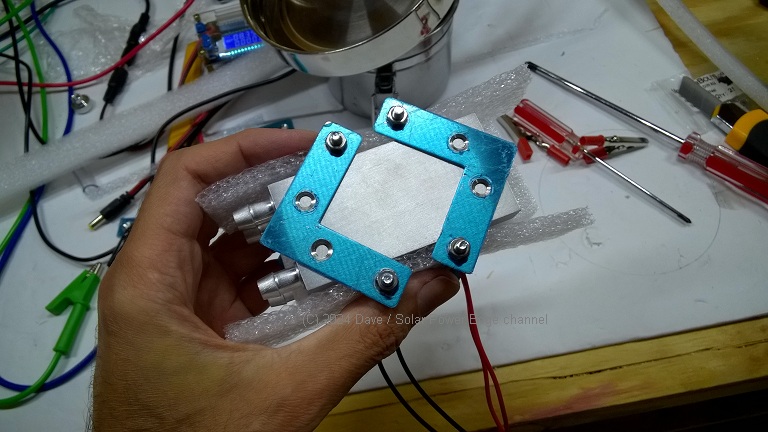
I soon confirmed that indeed peltiers work well enough to make a space cool, but not particularly enough to call a refrigerator – as expected. I tried various combinations, materials and arrangements. At first I struggled to reach 47 degrees Fahrenheit (8.3 Celcius) in the 1L+ container. That’s not cold enough to reliably preserve foods.
Peltiers are interesting in that they don’t just put extracted heat on their “hot side” but also a significant amount of what I call “waste heat”. Much like a compressor in a window air conditioner gets hot (wasting power and getting a workout) a peltier module also generates waste heat just from the mere fact that it is in operation. Electrically, Peltiers consume more wattage to cool a given space than a compressor and refrigerant based system – a major downside. So they generate more heat. For this reason, I experimented with simple water cooling setups. I settled on a small brushless water pump, a small radiator, a 12v fan and pumped some water through the system. With this, I managed to keep the peltier from overheating and pull the heat out. While it seems a bit complicated, the technology of water cooling is far below normal refrigeration systems, and also it’s fairly cheap.
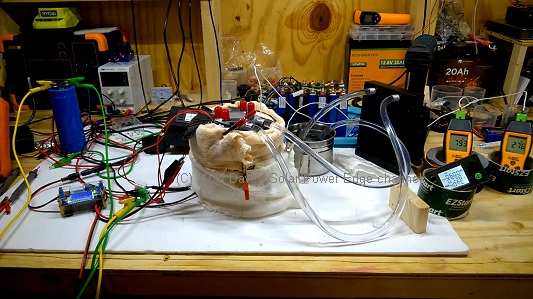
Eventually, I added a second peltier module to the container (a stack), but it did not immediately improve performance, in fact it was even worse. Over time I kept methodically experimenting and trying different combinations. It wasn’t until weeks later I managed to break through the 40 and then 32 degree Fahrenheit boundary (0C) for the first time. After all that work it was quite exciting – and I managed to catch it on camera!
Using 60 watts of DC solar power to achieve this compares unfavorably to compressor based systems. However, if you compare other aspects such as size, cost, complexity and DIY friendliness, Peltiers start to look better.
Obviously this freezer experiment doesn’t mean I can switch everything to Peltier cooling – but it makes me want to look farther into the technology to see what else it can do. Currently I am building version 3 (or maybe version 7 – I’ve made so many changes and lost track) of this prototype freezer. It remains to be seen exactly what its final form will be – just an experiment, or something I use every day. Some of my prototypes make it to everyday use cases (like my solar electric ovens and space heaters), while others need more development.
I hope you liked this experiment – thanks for reading and hope to see you next time! An additional update is posted down below. Dave, SPE
Project Update – Reached 14 degrees Fahrenheit in the latest tests
Over time I have been investigating the use of Peltier elements. They are solid state heat pumps and useful for a variety of purposes. Besides potential air conditioning applications, one of my interests was using Peltiers to make refrigerators – and if possible, freezers. Both are challenging topics.
Third Batch of Peltier Freezer Tests Update VLOG / Video
The earliest tests I conducted with Peltier modules were very disappointing, as expected. I could not reach freezing temperatures, and early prototypes just did not cool well at all. I used a small metal water block and a small radiator and fan to pull the heat out.
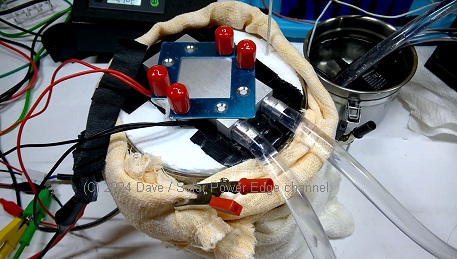
Peltiers require good heat exchange and a lot of tedious consideration in order to have even a chance of performing well. I learned this over time through hands-on experience.
Eventually I started experimenting with different peltier elements from all over the place to see which ones performed the best. It turns out many peltier elements look the same, but perform completely different. This can be very confusing to sort through.
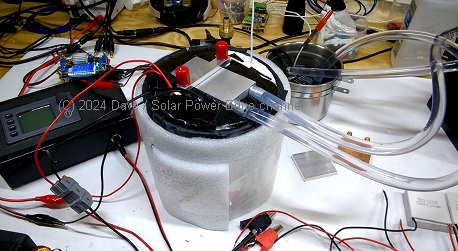
I had started early testing with a very small container I had laying around (not shown). The peltier was installed into the side with a K-type thermocouple to do temperature testing. Eventually, this led to a more involved series of tests I did with a larger / round container wrapped in a towel or and eventually foam insulation. You can see it in the photos posted on this page.
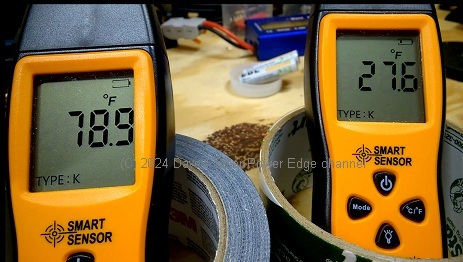
Eventually I was able to get this container down to about 45-47 degrees Fahrenheit. Then as the design evolved, I hit below freezing temperature for the first time. Finally in the most recent tests (posted on this page) I was able to hit 14 degrees Fahrenheit. This was over 60 degrees of differential below ambient.
Having learned a lot from all this experimentation, I have decided to build a solar powered refrigerator or freezer that uses Peltier modules to do the cooling. I don’t know exactly how efficient or useful it will be – but at the very least it will be a very educational process.
The current work ongoing is to create a larger refrigerator or freezer that can hold a decent amount of food or drinks, while being powered entirely by direct DC solar power.
Further updates on this work, if successful, will be posted on this blog as well as my YouTube channel. Thanks for reading and hope to see you next time! -Dave, SPE
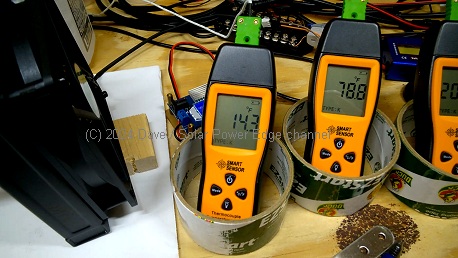
Update 12-2024 Efficiency Research pays off. I was able to cut the power draw of my peltier test freezer by 50% with the same cold temps! I learned to ignore conventional wisdom about Peltiers and follow my own path. I am building a small fridge prototype to test these ideas. (VLOG update posted below)
 Solar Thoughts blog