There is one resource any Survivalist or Preparedness oriented person should be an expert on first and foremost. You must have skills in retrieving, storing and processing it – or all the rest of your preps simply don’t matter!
Having the right mindset is still top of the list, yet everything still depends on this one critical resource. And this resource needs to be complete (addressed at the very end of the article).
What is it?
The short answer is…

Drinking Water… But Not Just Drinking Water. At the end of this article you will see what I mean!
You can have 10 tons of food, a compass, all kinds of solar equipment and still be woefully unprepared. A person can go 40 days without food, and they will survive. I have personally witnessed that. I have experienced fasting and I know what it’s like to go without food.
But a person cannot survive more than a few days without water. By the second or third day without drinking water, you will be in serious trouble. As a person who has suffered from migraines and vomiting for decades, I know what it’s like to just exist rather than live. During severe migraine attacks, I can reach 2-3 days of dehydration – which turns into a near death experience. And during and after each attack, I sure wish I could die.
Believe me, dehydration will 100% shut a person down. So much for “survival plans”. Compass? Forget about it, can’t even get up off the ground! The worst part is dehydration itself often causes severe pain, which in turns induces vomiting, which in turn causes more dehydration. I have experienced this many times and wish to avoid it at all costs.
My Philosophy on Emergency Drinking Water Supply
To point out an obvious but often overlooked fact, water is very heavy. Storing it is possible, but there are limitations. Therefore, it’s not enough to have stores of water – we should focus on possessing “the means of production” so we can make drinking water for our families anywhere, anytime. That’s in addition to storing excess drinking water as a “buffer” during the onset of a disaster or emergency scenario.
Who knows what water sources we will have access to in the future. But there are well known and established methods of purifying drinking water. And my number one goal is not to get stuck on any single one of them.
Instead, I have diversified by acquiring and maintaining the following methods of water purification:
Steam Distillation
I have discovered that steam distillation is truly an effective means of purifying drinking water, but with massive downsides. Boiling water is an Endothermic process, where energy is put into the water, causing it to boil. The steam is released as an Exothermic process (heat energy is given off) and then cooled and condensed to form pure water.
However, the energy requirement is massive. It has to come from somewhere. If you have a lot of batteries, solar panels and excess power, an electric water distiller seems one of the most high-tech and convenient options. The distiller I normally use consumes about 600 watts and runs for 2 hours. That’s 1.2 kW/h, a serious amount of power to get 1 gallon of drinking water. However, everything is relative. That gallon will probably last me more than a day. My off electrical grid solar power systems are big enough to operate a 600w distiller, as long as there is some sun.
A potential alternative or secondary method to steam distillation is to use a solar water still. There are many different kinds, some not all that effective. You might have to build one yourself. But the fact is, if there is difficulty acquiring clean drinking water, every extra drop you can get will be helpful.
Mechanical Filtration
Another type of water purification method uses mechanical filters, such as charcoal, sand, Reverse Osmosis etc. A berkey filter is a good example – it does not use electricity, and can be packed away safely until needed. I spent several years testing and using one of those filters, and learned all about how to maintain and operate them. The knowledge and experience is invaluable from a survival and preparedness standpoint. There is quite a lot of maintenance involved. The input side of the filter does require cleaning as the contaminants collect there, and the filter media are somewhat expensive and fragile.
The upside is these mechanical methods can be stored long-term until needed, and don’t need a lot of energy or skill to operate. They are portable as well. So why not have one or more of such devices available? They are wise investments. which can help protect your family from future hardship. Knowing how to use them and having experience with them could save you a lot of trouble!
Portable Drinking Straw Filters
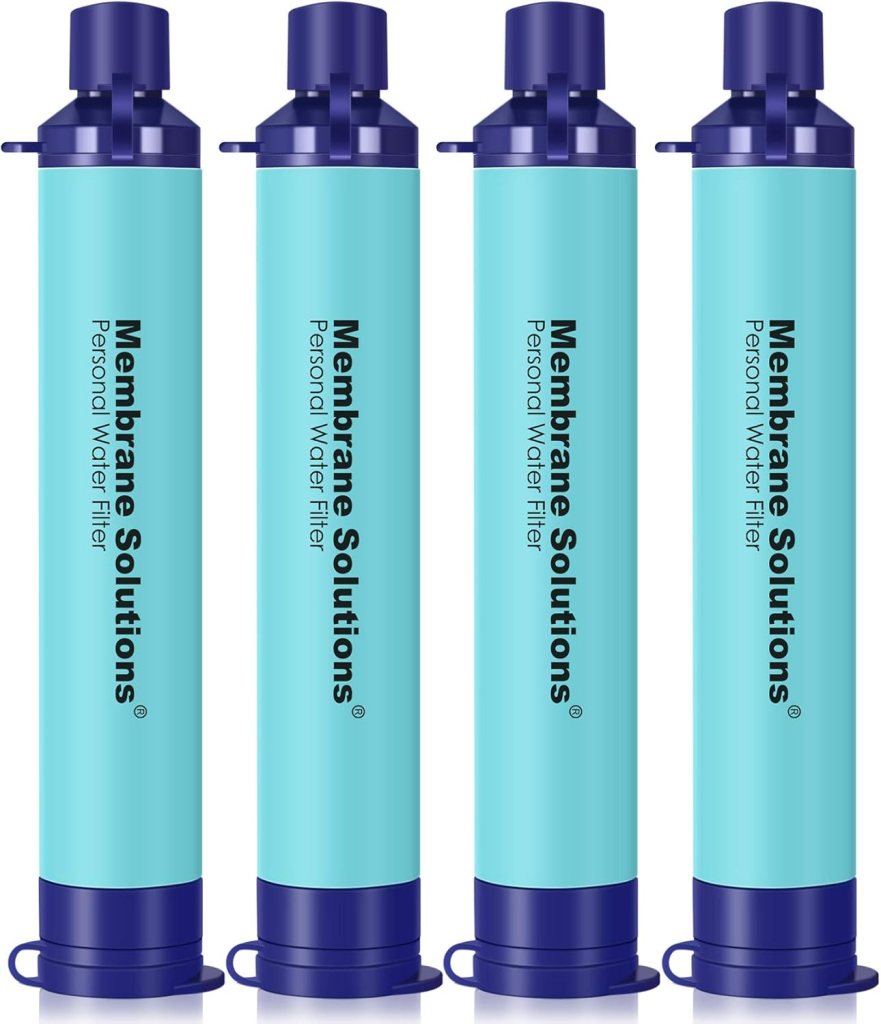
Another category of mechanical filters are the kind you can use on the go. Such a filter could certainly save your life. A good example is a “water filter straw”. Having prioritized other methods in my preparedness strategy, I never owned one until recently. But a while back, I had the opportunity to test the Membrane Solutions drinking straw water filter.
Please note: I don’t receive commissions from Membrane Solutions – but they did send me their filter straw to take apart for this article 🙂 They gave me a 20% discount code for their filters if you are interested! solarpower1
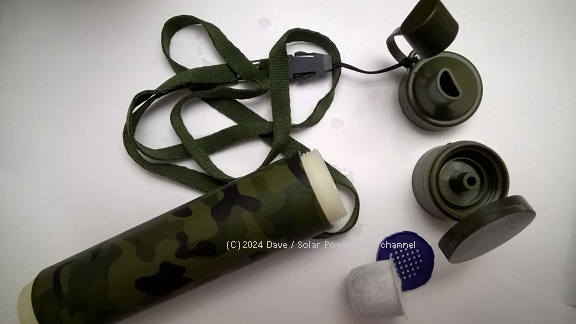
On this page are pictures of that device during my investigation of it. The device is a plastic tube with layers of filter media inside. It has low weight and is relatively affordable. In a desperate situation, a filter straw would make all the difference in the world.
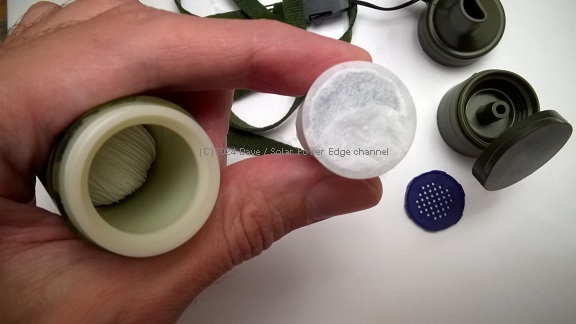
Inside it has various filters including what looks like, at first glance, ceramic and activated carbon media. This is effective at removing contaminants due to a .1 micron pore size.
This device is very interesting in that it’s totally portable and backpack-sized. One can drink directly from a pond in theory, or attach a water bottle and use the pressure of water mass to force contaminated water through the filter and produce clean drinking water. Fascinating!
Solar Electric Water Distillation – With Diodes??
I am always looking for new ways to distill water. In my solar workshop, there are a lot of projects and prototypes that never see the light of day. Or at least yet. One of them is a solar electric water distiller that uses only about 15 watts of DC power to distill water. I believe it’s the smallest and most efficient solar electric water distiller in the world of its type.
Not only that, it uses a Semiconductor based heating element – a diode chain array. This extracts the solar electric heat and operates at or near the max power voltage (vMP). A diode chain (or diode string) acts very similar to an MPPT circuit, but without the complexity and cost. This means more heat from the same sized solar panel versus traditional resistance based (Ohmic) heating elements.
The research into this topic is ongoing, including live working prototypes of semiconductor-based room heaters, cooking systems and even hot water systems.
Reference: vMP Diode Chain Solar Electric Heating Research
The Critical Component: Electrolytes
If you read this far, you are smart and patient! Electrolytes – this is where many people fall short and do not understand what the human body needs. Thus even with water stores, they are still woefully unprepared for emergency scenarios.
Water by itself does not necessarily “hydrate” the human body. While pure distilled water is healthy to drink, it is incomplete. To truly hydrate, the human body must have electrolytes available in the water, and in the right amounts for each specific persons’ needs (everybody is different). Distillation removes pretty much all minerals from the water. Other methods may not have this downside, but the minerals in that water are in no way guaranteed to be sufficient. Therefore, availability of electrolytes for emergency supplementation is imperative.
The primary electrolytes are table salt (sodium chloride, Na) Potassium (K) and Magnesium (Mg). There are also many trace minerals that are useful to have. The primary electrolytes aren’t necessarily able to be acquired in sufficient quantities through food. Especially Potassium. Therefore, in addition to possessing the ability to source and purify drinking water, it is imperative that the survivalist store a supply of pure sodium chloride, potassium and magnesium.
The human body is saline, meaning it’s full of salt. If you lose too much salt, the body will begin shutting down and can cause all kinds of terrible symptoms and even death.
What happens when a person sweats? Answer: they lose salt and minerals.
Warning! Use caution when consuming Potassium supplements. Sodium and Potassium are like the flip side of a coin – each must maintain a balance. If you consume too much sodium too quickly, your blood pressure will go through the roof! If you consume too much potassium, your heart rate can drop, and at some point it can cause death.
Let’s take it to the next level of survivalist medical knowledge!
What happens if you are stressed? Answer: you lose more salt.
What happens if you consume sugar, sweets and sweetened beverages? Answer: you guessed it, you lose more salt!
You can see that being prepared and having water access should be taken very seriously. And simply put, you need at least a few pounds of salt to go with that water. Having other electrolytes stored is not a bad idea either.
I hope you found this article useful or at least interesting – thanks for reading! -Dave, SPE
Image Credits: Pixabay, and my own photographs
 Solar Thoughts blog