I really love water… and pumps… any excuse to play with them I will take. For years, I have wanted to build a gray (grey) water recycling system. Gray water means from the sink, dishwasher, laundry etc. and not sewage, which must never be discharged without proper treatment – that would cause a major health hazard.
The first problem one might encounter, is the requirement to re-plumb a household to separate and divert the gray water. Normally, this water drains into a septic tank or city sewer system.
At my previous house, I had no chance of setting up such a system – it just wasn’t going to happen. But recently, I completed a move to a new 35-plus acre homestead property in the country. And as part of the move, I spent the money to install a gray water drain line and re-plumb sinks, laundry and dishwasher to route to this drain line instead of the septic tank.
Now instead of the gray water draining into the septic tank and drain field, it goes out a separate drain pipe into a separate treatment area, which is currently under construction. I will post more details / videos about this project as soon as possible. Any current available work will be posted at the bottom of this page IF I REMEMBER – so subscribe to my YouTube channel if you don’t want to miss anything!
Drain Pipe Venting
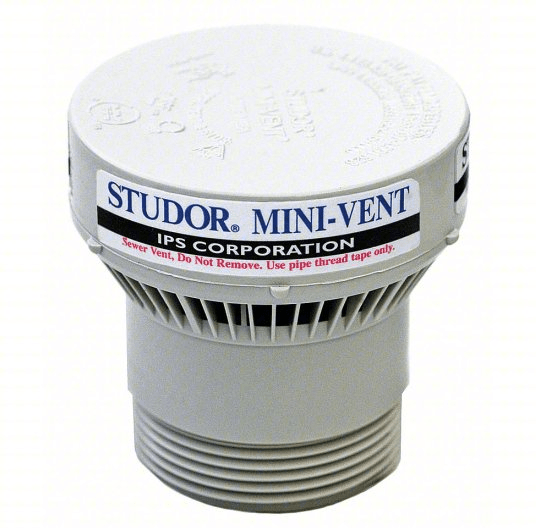
One of the challenges one might encounter when re-plumbing for gray water drainage is the drain pipe vents. Each drain must have a vent stack (it’s called “air behind water”) in order for the water to flow properly out of the house and down the drain pipe.
It is imperative not to remove or disturb the existing vent stacks which are still used by the septic system for toilets. If there isn’t proper venting, the toilets will no longer flush! So how to vent the new gray water drain ouputs without punching more holes in the roof and adding more vent stacks? There is a type of vent called a “Studor Vent” which can be installed underneath the house on each drain line. They have a one-way valve which allows air to be sucked in by gray water passing through, but they will not allow anything to flow back out. This is a great way to ensure air-behind-water and good drain flow, without ever touching the roof or adding vent stacks. And of course, my new gray water system has these vents installed.
A Simple Solar Pump is Born
Due to a lot of work overload and unforeseen circumstances, I wasn’t able to finish building the gray water recycling system in my yard at the start. And I needed to pump significant quantities of gray water into a leach field or at least out of my way while I did the construction and ground work.
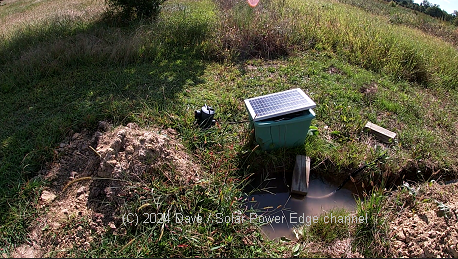
What I wanted to do was develop and build a simple solar pump system with extremely low complexity. So I took a 12v marine Bilge Pump, hose kit and a car wash bucket and assembled it into a sort of pump/filter combo. I am still experimenting with exactly how to build this, but it was a start.
Then I attached a 12v 50ah LiFePO4 battery to a 20w 12v solar panel by itself, later adding a single rectifier (blocking) diode. To my surprise, this simple solar pump worked so well I became very attached to it. Then I decided to invest in improving the design into something permanent – yet portable – for greenhouse irrigation and other tasks.
The pump runs 24×7, moves a ton of water, is reliable, fairly cheap and 100% solar powered. Plus it has NO electronics (unless you count a single diode as electronics).
Diodes, Again
In the process of building and testing this pump system, I became curious about what would happen in a Grid-Down situation where something like a basic cheap solar off-the-shelf charge controller would not be available. How to cope with that? The Most Basic Answer: just hook the solar panel up to the battery with a blocking diode pulled from old salvaged equipment, and keep an eye on the battery…
But what if that’s not fancy enough?
I have heard that a “solar diode chain” can be used to make a rudimentary voltage regulator and solar charge controller for batteries and other devices. So I embarked on some research to see if that is possible. I documented some of my ideas and research work in the video posted on this page.
More to come. Thanks for reading, see you later! -Dave, SPE
 Solar Thoughts blog