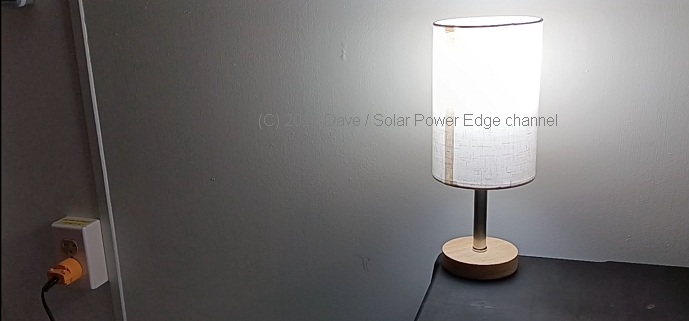
We have built and installed a simple 100% DC off grid solar power system prototype in our house that uses NO charge controller and NO inverter. It has been operating 24×7 for the past few months with zero problems. Currently the system provides space heating, cooking and lighting using direct PV-DC with or without a battery bank. A 55v DC air conditioning rollout and conversion of additional appliances to 55Vdc is in progress. Several years of testing, research and developent are behind the project.
The system has the following features and capabilities:
NO Charge Controller: direct DC into the battery bank, through electromechanical ideal blocking diode (EIBD) with OVP/UVP functions. The nominal system voltage is directly compatible with 51.2V (16S) LiFePO4 battery modules. 90-95% energy extraction is possible. MPPT is simply a device that matches the solar panel array voltage to the battery, but we have eliminated that requirement – making MPPT redundant and unnecessary.
Benefits: lower startup costs, lower complexity, less electronics to fail
Like what I’m doing? Buy Me A Coffee on On Ko-Fi! 
NO Inverter: all appliances use 55V DC (Direct Current) natively from the wall outlet with no switching or voltage conversion.
Benefits: no switching noise (EMI/EMF), lower startup costs, lower complexity, less electronics to fail
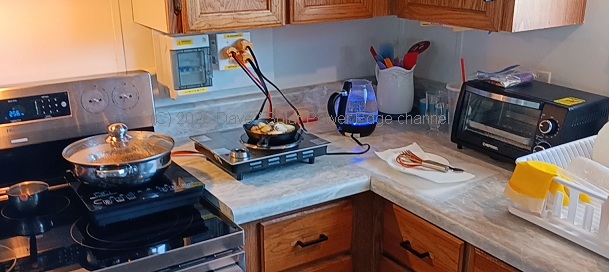
DC Kitchen Appliances: we have the ability to cook food 24x7x365 without fuel using clean renewable PV solar power delivered through 55V DC wall outlets. If no battery is available, cooking can still take place during the day use PV2L / Direct Drive DC solar power.
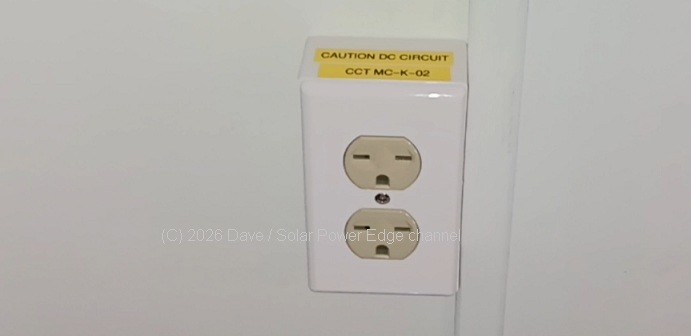
Residential DC Wall Outlets: NEMA-15R receptacles are used to distribute power to each room in the house.
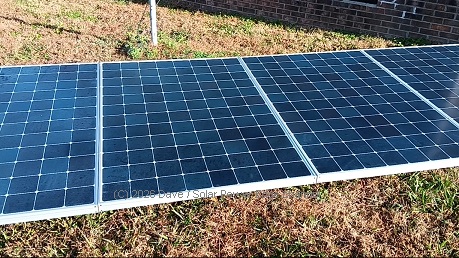
PV2L / Battery Optional Mode: the system can operate with or without a 51.2v LiFePO4 baattery. I call this Direct-PV, PV2L (PV-To-Load) mode. All wall outlets, appliances and devices are literally powered directly from the PV solar panels themselves!
Benefits: ability to bring the system online immediately without a battery, lower startup costs
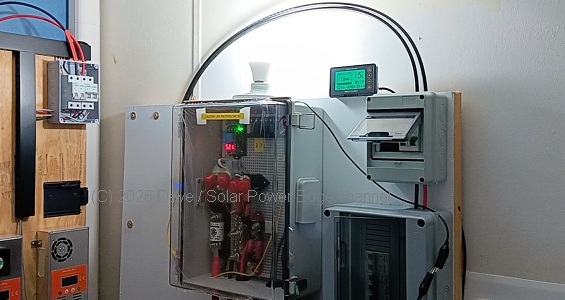
Battery Integration Control: assuming a battery is available, after it is charged to 80% SoC it is simply switched out of the DC bus. During the day when there is plenty of solar power, the battery is not used, and everything in the house operates on direct-drive DC solar power. The design requirements call for fast blow DC fuses at both ends of the bus in each building to protect from bi-directional fault currents. Due to the direct-drive PV functionality, fault currents can originate from any section of the DC bus – however the cost of a few extra fuses is negligable.
Benefits: system does not need a battery immediately at system installation, lower startup / installation costs, fewer battery cycles required
DC Load Center: this module takes the place of the traditional “AC Load Center” in a typical residential structure. It is responsible for primary termination of all DC inputs (PV solar, battery banks) and (outputs circuits, bus links to adjacent powered structures). It uses standard DC breakers to protect each circuit from fault currents.
Super Capacitors: the system can leverage supercapacitor banks (optional) if desired when running in PV2L mode. This makes it even less likely that the battery would get cycled during the day.
Benefits: less battery cycling, fewer PV2L-Battery transition events, ability to handle large surges without using the battery at all, easier to avoid the battery altogether if needed
Other Features and Notes: due to the relatively low voltage of 50-55V DC nominal, electrocution hazards are greatly reduced. At 100+ volts DC, electrocution risk is increasingly high, due to the ability of the current to penetrate skin and reach the nerve pathways.
At 55 Volts DC, arcing is less of a problem on wall outlets vs. higher DC voltages.
The system has good compatibility with existing available 48V DC appliances, which can tolerate 50+ volts DC easily.
Ability to link multiple buildings and multiple solar arrays, creating a decentralized fabric or micro grid. This design is more resilient and fault tolerant than the traditional off grid solar paradigm which consists of a single battery bank, charger controller, inverter and solar array powering the entire property via AC cables.
At 55 Volts DC nominal, copper wires must sometimes be upsized, but the increased copper cost is far outweighed by savings inherent in the design. Eliminating a 500 dollar charge controller, for example, can buy a lot of copper cable. Plus, the copper cable will never fail and can last decades. The charge controller will eventually fail and require replacement.
I have found 55 volts DC is suprisingly powerful and safe for most household tasks. Even 14awg wire is proving useful inside a residential building for 55V power circuits. For larger appliances such as DC electric dryers, a short run of 0awg cable is recommended, but the cost savings are still greater than the amount spent on upgraded cabling.
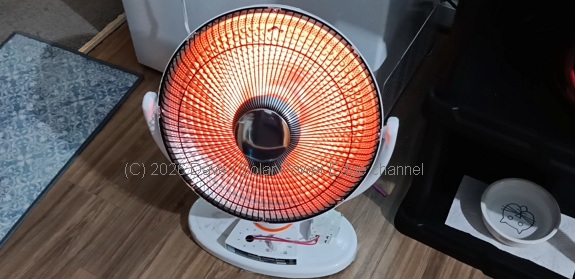
Space Heating: simple resistance space heaters can be powered from individual DC wall outlets throughout the house, either on Direct PV DC (PV2L) or in combination with 51.2v battery banks. I have heated my house for several years using about a dozen modified DC space heaters.
Benefits: easy and accessible conversion of excess PV solar power into supplemental and/or primary space heat at very low costs, low complexity. A “hot coil of wire” (space heater) has to be one of the cheapest and most DIY-friendly systems to maintain, compared to more complex systems.
Other features include circuit presence detection, linking multiple buildings together in a DC micro grid, setting node priority, power routing and control (energy balance), simple electromechanical controls throughout, strong system resilience and fault tolerance, robust fault current protection, and much more.
There is much more to this prototype system design than I have had time to document. I hope to write more about it later! Thanks for reading, take care! -Dave, SPE

