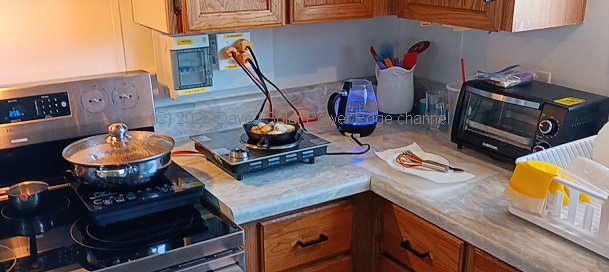
Well, it’s been a long time since I wrote on the topic of Residential Low Voltage DC power systems. As of November 2026, off grid 48 Volts DC is really taking over our house and property! The system works better than ever, and I have invested hundreds of hours (not to mention cash, blood, sweat and tears) improving and expanding it.
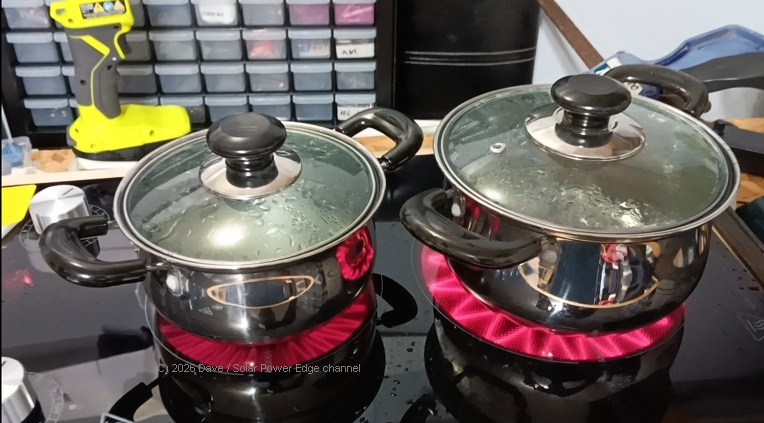
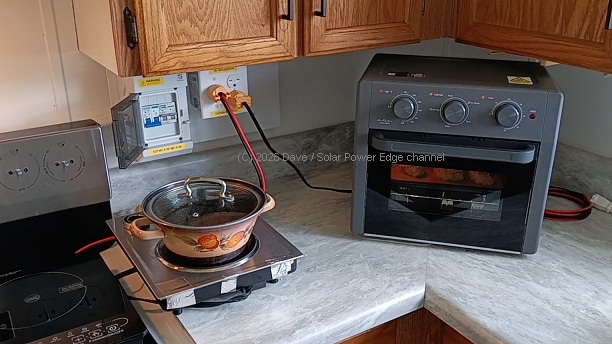
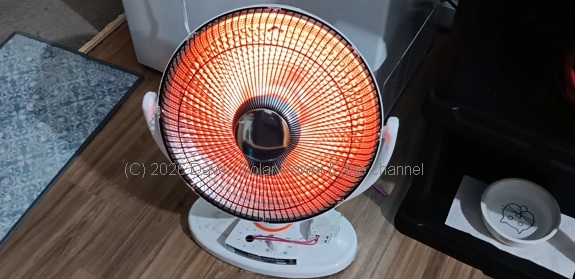
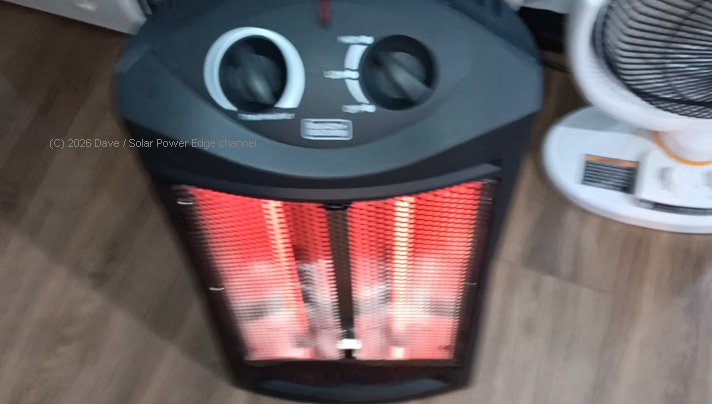
New Projects include larger more powerful DC wall sockets, a battery capacity expansion, 48V high-power electric DC heating (capable of consuming direct PV power of course), a fully tip-over protected 48V DC space heater, 2 high-power dual-burner stove/cooktops, a 48V new water distiller, and much more behind the scenes.
Over the past several years, I have been experimenting and researching many NEW ways to use solar power, and attempting to escape the current paradigm that solar has become. I wanted to get back to the source, which is pure DC from the solar panels themselves – and skip as much of the complexity as possible. There is one thing for sure – complexity has been continually added to solar power since its inception. Nothing is simple any more…
When I started this research several years ago, I made it my goal to create a more streamlined, affordable and robust off-grid solar power system. The question kept coming back – why not a Pure DC system?
Why convert DC voltage multiple times just to power a single appliance?
For example, to power a laptop from a typical off grid system, the PV DC gets converted through the MPPT to battery voltage, boosted to HV-AC, converted to HV-DC, converted back to HV-AC inside the inverter; this voltage is then pushed into an SMPS laptop power brick which converts the HV-AC to HV-DC, then back down to LV-DC, and finally into the laptop itself. Not leaving well enough alone, the laptop itself converts that DC input voltage into multiple lower DC voltages yet again. That’s at least SEVEN conversions of voltage just to power one device – simply absurd! And every single voltage conversion wastes power.
After years of mishaps and setbacks, I believe I have succeeded in eliminating much of this inefficiency by creating a new all-DC off grid ecosystem. I researched, developed, built and installed a residential DC electrical service fed by off-grid solar power systems which eliminated the charge controller AND the AC power inverter, and almost all complex electronics. As of 2026 the system has been through multiple iterations and continues to be updated, expanded and refined.
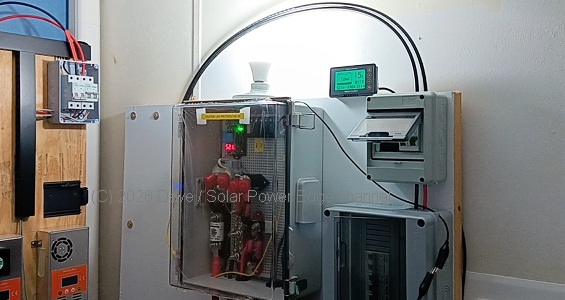
Due to the voltage-matched design, PV DC solar panels can be the system’s sole power source. A battery can still be plugged in at any time – great for getting homes up and running fast on PV DC, without requiring battery storage just to get online. The system’s distributed archichecture links multiple buildings together so we can power our entire property with smooth, clean Off Grid DC 24x7x365!
A Different Vision of Solar Power – For The Worldwide Poor
I have a different vision of what solar power can do for the world at large. Meaning everyone – including those poor people who can barely afford a couple of solar panels, let alone everything else we’re “supposed to buy” to go off grid. In developed economies, some take it for granted that they can go buy thousands of dollars of components and install them: solar panels, rack mounts, cabling, charge controllers, batteries, inverters, monitoring and much more.
But what if a person can only afford a couple of solar panels without much left over? What about them? Well, they have been left behind for at least the past several decades. The solution to this problem and many others, is direct PV-DC power. This concept greatly increases flexibility, widens potential use cases and expands solar’s reach beyond those with wealth. In my view, there is clearly a lack of attention given to direct-drive PV-DC home and cooking appliances. By cutting out all the intermediate components and eliminating excess cost and complexity, solar panels can deliver working force and energy right to where it’s needed – with elegant simplicity and huge cost savings!
Drawing Inspiration From The 1900s
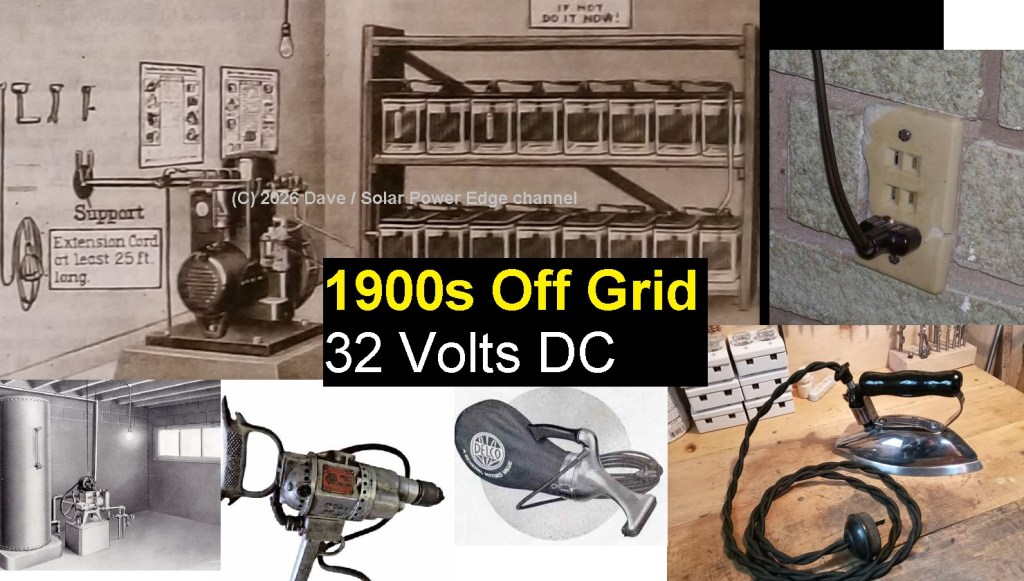
Believe it or not. In the 1900s when what we know today as the “electric utility power grid” was first getting its start, a lot of farms and houses were powered by 32 Volts DC battery banks. They were charged by windmills and/or small gas generators sometimes known as “light stands” because they more or less were intended to power electric filament light bulbs.
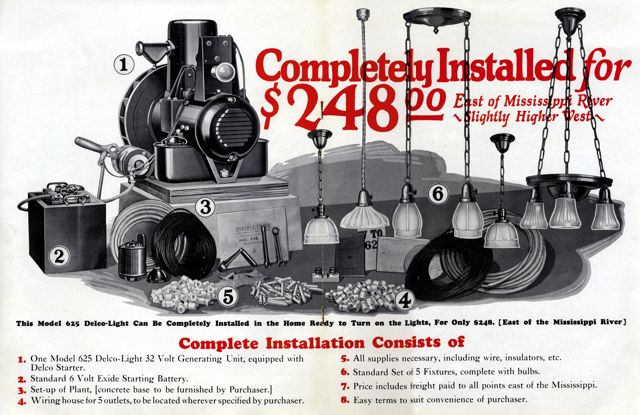
32V DC wall sockets / outlets in the houses and farm buildings allowed operation of every kind of appliance you could think of on clean, smooth DC power: radios, lights, vacuums, irons, coffee brewers, water pumps, the list is very long. Unfortunately, the history of these systems seems to have been almost entirely lost – I struggled to find much information about them. What a shame!
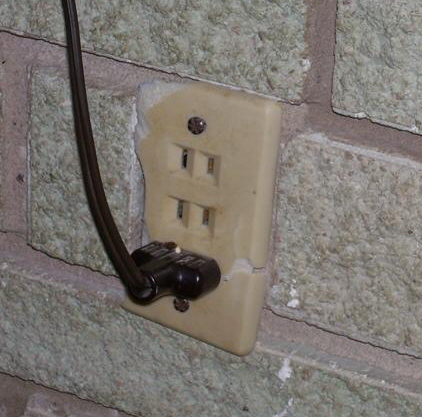
Taking part of my inspiration from these early systems that only used 32 Volts direct current to operate, my dream was to bring direct PV DC power to wall outlets installed throughout my house and property. Plugging space heaters, lights, appliances, cookware, fans, air conditioners and more into direct PV DC power at the wall seemed like the ultimate in grid-down simplicity and robustness.
But I designed my system with a special feature, taking the idea of streamlined simplicity as far as I could. Since we have solar panels generating endless power during the day, it’s possible to run the entire sytem from the DC generated by solar alone. No battery! Add one later, or use PV-only, either way the user gets value from the system.
What About High Voltage DC?
High DC voltages are dangerous, and can be lethal – especially for the average DIY’er or solar enthusiast. It’s hard to get clear information on what level of DC voltage could still be “safe”. There have been rare cases of death on as little as ~30 volts DC. My research indicates that around 50V DC is the edge of reasonable safety, and after that it’s increasingly risky to children, pets and even adults. There is one advantage of high voltage AC (Alternating Current) mains voltage: it gives you 50-60 chances per second (50/60Hz) to let go of that wire you accidentally touched. DC on the other hand, doesn’t give any such opportunities. People who contact high DC voltage tend to “lock up” and can’t let go of the wire or cable. If someone tries to assist them, they too can become part of the circuit and get shocked. Not pretty.
One thing is certain, I did NOT want 100-200 volts DC coursing through wires laying on my carpet, near my feet and my pets. No thanks…
Thomas Edison initially created a 110v DC power grid for his lighting company, later switching to 2-phase (center-tapped) 220V DC. However, Edison had serious concerns about the safety of his system in residential locations – and for good reasons. Electrocutions could and did happen, and the results were not pretty. But because he was having to transmit power over very long distances (miles) he had no choice but to up the voltage. Even at 100-200 volts DC, power transmission distance remained very limited.

After considerable work researching this area, I discovered that a nominal 55 Volts D.C. was strong enough to push significant power in the kilo-watt range to appliances and loads in a typical home, while not requiring too much more copper investment in most cases. Because power transmission is local and short-range, the lower voltage is still effective up to certain distances (for example, building to building). In my case, the farthest I have to transmit is about 100 feet or so – but I have already solved the challenge by simply upsizing the copper cable to the correct gauge for that leg of the system. In some parts of my system, I used as little as 18awg copper for lighting drops. Power appliance and heating circuits typically use 6-12awg stranded copper wire. For high power machines, I might switch to 0awg but only for a short distance run.
Addressing Electrical Resistivity and Voltage Drop
As you may know, electrical resistivity models tell us that as current (amperage) on a wire increases, so will the voltage drop (losses) due to resistance (in Ohms). But what some fail to grasp is this works BOTH ways. The sky is not falling, by simply upsizing the wire a gauge or two, the losses are mitigated. Wires and cables are a bit thicker, but they are also extremely robust and durable. They have no moving parts and will outlast their users. When you save 500-1000 dollars or more on charge controllers and inverters, spending a couple of hundred on high quality copper cables is NO PROBLEM! Not to mention the lower voltage is safer and less stressful in a residential environment. Plus, 55V nominal is direct-DC compatible with certain solar panels – as well as 51.2V 16S LiFePO4 (48V) batteries! A match made in heaven…
Expanding the 55V DC System to our Kitchen
It already fascinated me that a solar panel array could directly drive multiple DC loads under the right conditions. No battery, no inverter, no charge controller. Amazing! But I wanted to take it farther.
And so I did. In this article, I will present a brief overview of what I call a 55V DC PV2L Hybrid Micro Grid – the first installed version has already been operating in my house and property for several months now. PV2L is an abbreviation for PV-To-Load, which means directly driving a DC load from PV solar panels.
A Simple, Robust and Streamlined Design
The system is very simple in it’s overall design. First, it consists of a DC bus or load center at central locations inside each building throughout the property. It has a positive and negative input, fuses, diodes, meters, contactors, breakers and other components, but manages to be far simpler than traditional off grid solar equipment. Each building is tied together and forms the individual nodes of the distributed DC micro grid.
Groups of PV DC solar panels are fed directly into this bus, and therefore are the primary source of power for the entire DC micro grid. When I plug an appliance into the wall outlet, it’s literally plugging straight into solar panels. I never get tired of the elegance of this design….
Each DC bus node is then tied together with copper conductors, both within the home itself and inside other buildings on the same property. These effectively become “nodes” of a small self-hosted distributed residential power grid.
Because the transmission distances are short, voltages can be kept nice and safe. The system operates at 55V DC (a nominal voltage). Therefore concerns of electrocution are greatly mitigated compared to high-voltage DC systems.
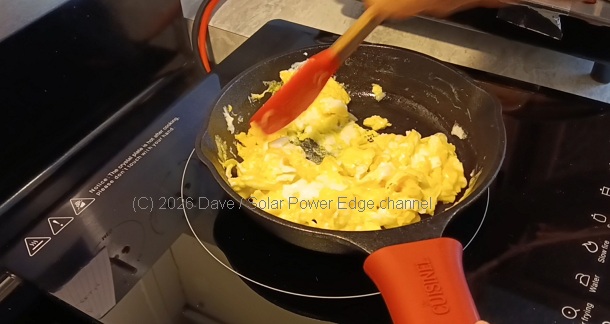
Plus, lower voltage equipment can be a bit more accessible. 48V cookware for example, is already commonly available in some markets, and is usually plug-and-play compatible with my system design.
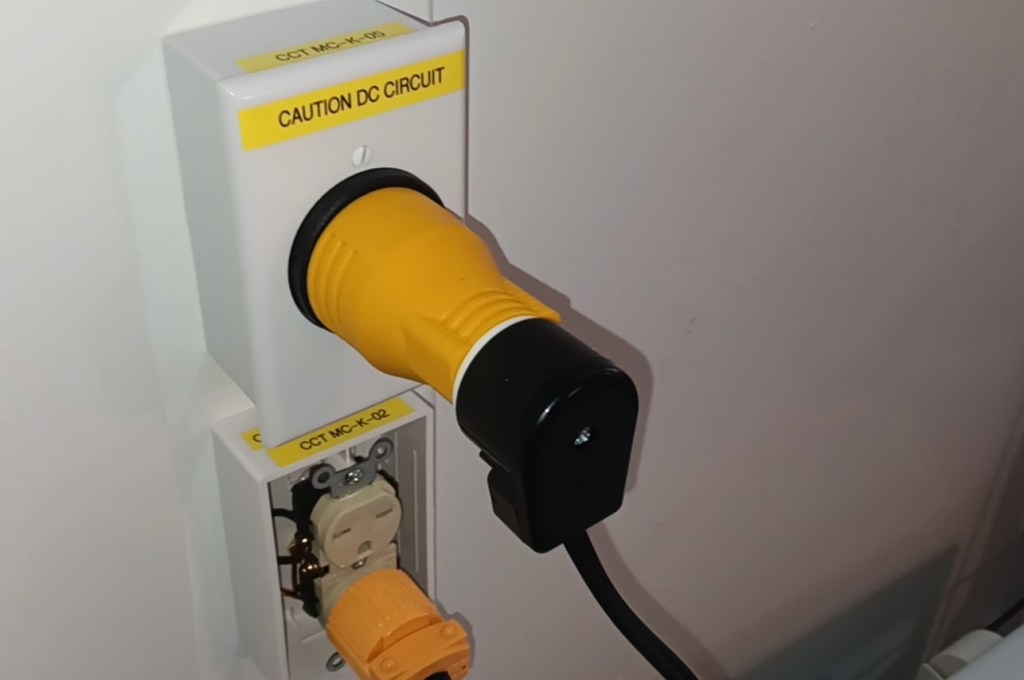
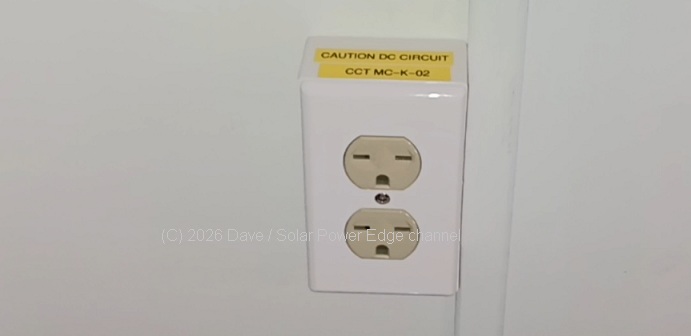
The DC power is distributed mostly through common NEMA-standard wall outlets which are installed in the house. Rather than use complicated electronics, I kept the system very simple – I’m thinking “grid-down” simple here.
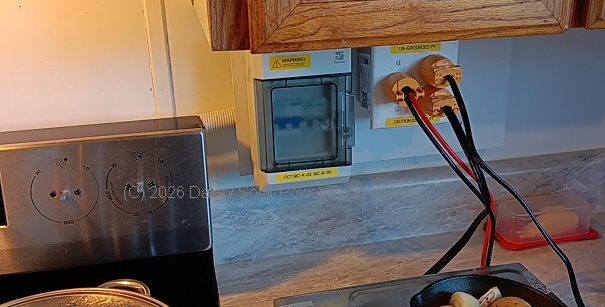
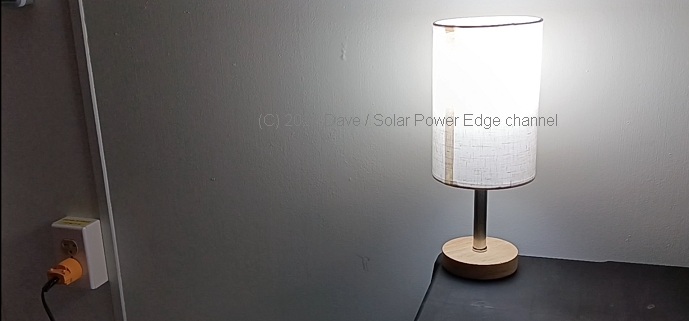
I am still developing DIY appliances to fill in the gap – it seems more difficult to get DC appliances than it should be. 48V devices usually work fine in the system. It’s also possible to find LED light bulbs that run on around 48-55V, so converting table lamps to run on the system is a piece of cake.
What About Power Storage?
Solar panels themselves don’t “store” any energy. This 55V DC system can operate without a battery as long as there is sufficient sunshine and enough solar panels connected. But what if I want a battery? No problem.
The beauty of such a simple design is that having a battery is literally optional. A strange idea at first glance, but makes more sense if you consider the world at large. Even if the battery fails or is not available, all circuits will still work during the day. A 51.2V LiFePO4 battery is an excellent match at the low end of the 55V nominal region. If connected, a contactor will add the battery to the bus only if needed. For example, if a large powerful appliances is turned on, or a cloud passes over, the DC micro grid voltage might sag – thus triggering the contactor and prompting the battery to step in and hold the voltage up into the proper range.
Otherwise, the battery is switched out of circuit, and kept on standby. Less battery cycling is the result.
Battery: Supplied By Power Queen
Disclosure: I agreed to make a video documenting my project in exchange for the battery. I do not accept affiliate sales commissions and make no money on sales.
While building out this project, I was contacted by Power Queen, which offered support via their 100ah 51.2V Smart LiFePO4 battery. I gladly accepted and truly appreciate their support of the project. I could not afford such an expensive battery without a partnership. As far back as 2024, I have had positive experiences with Power Queen energy storage, so this battery was a logical choice for my new project. During the entire initial test of the battery which ran around the clock, we did not experience a single problem or issue with it. As of the completion of this article, it’s still working perfectly.
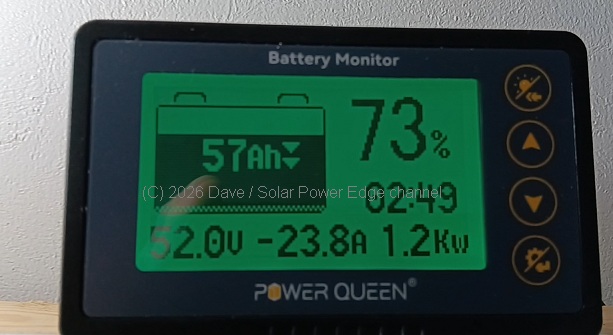
The Power Queen battery monitor is a nice upgrade as it removes the mystery from battery SoC. Even when the system is running in PV2L mode on solar panels alone, and the battery is on standby, the battery monitor screen stays active and lets us know at a glance how much power is available – if and when it’s needed.
Power Queen Discount Code – no strings attached!
You can use this link and code to get a discount on Power Queen batteries. I don’t accept profits from sales, but sharing my discount code could save you a few bucks 🙂
https://ipowerqueen.com/?ref=blwlqisk
Code: SPE6
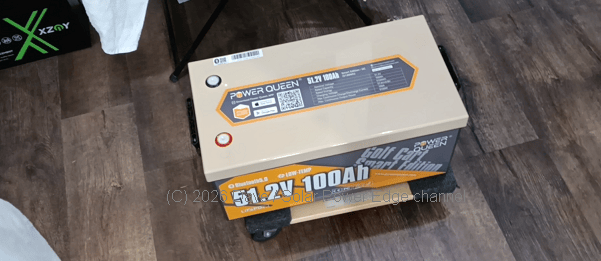
The battery itself is quite compact for 5kW/h of storage. I then fitted it into the solar and utility room of our house, and connected it to the Power Queen provided DC shunt (battery meter) using 0awg stranded copper cables.
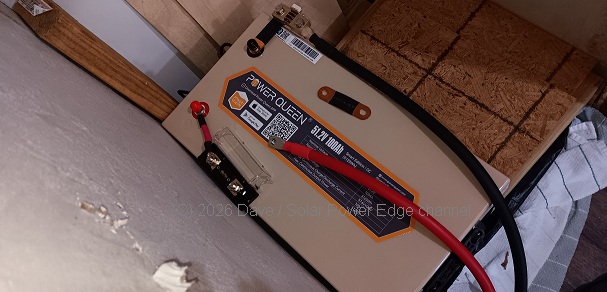
Power Queen also sent over their DC battery meter with shunt for the project, and you can see that here measuring out 1.2kW during a typical testing session.
No Charge Controller?
Indeed, the system has no charge controller at all. It’s a different kind of thinking. The battery is not primary. PV DC solar power is primary. The battery can stay switched out of circuit (on standby) during the day with sufficient PV solar arrays online. However, the solar panels were carefully chosen years ago to be an almost perfect match for 51.2V LiFePO4 nominal voltages. What does that mean?
Simple – no DC-DC voltage conversion is required to charge such a battery. When the battery is switched in, any excess power on the DC bus goes directly into the battery, through an electromechanical ideal blocking diode (EIBD). If the battery reaches 80-90% SoC, it simply gets switched out of circuit and goes into standby. If PV DC into the battery side exceeds 5 amps, the diode gets shorted out of circuit by an electromechanical DC contactor. Simple, robust, and elegant!
Returning to the 32V DC Houses of the 1900s
Times have changed. But I know DC can power houses in the modern age. It’s already been done. And it’s 100% technically feasible. AC power is a remnant of the centralized AC power grid, so for a true off grid home, it makes more sense to use DC – after all, that’s what comes out of the solar panel in the first place. Of course the reality is most available appliances are A.C. – no suprise there. That situation is slowly changing – too slow in my opinion. But it is changing.
We are currently building and converting appliances to operate on 55V DC for our house and homestead property. I will write more on the topic later as my research is completed. Stay tuned for that article! Thanks for reading and take care! -Dave, SPE

